
Net profit margin is a key indicator reflecting the ability of a business to operate efficiently and sustainably. Generally, businesses need to manage costs and revenue in a balanced way to maximize profits. Therefore, the average profit margin is one of the important indicators that helps business owners analyze and plan their financial strategies effectively

What is Net Profit Margin?
Net profit margin is a key indicator of a business's profitability. It represents the percentage of total revenue that becomes net profit after deducting all expenses, such as cost of goods sold, operating expenses, taxes, and interest. The net profit margin is an indicator of a company's financial health and its ability to generate profit from its revenue
How to calculate
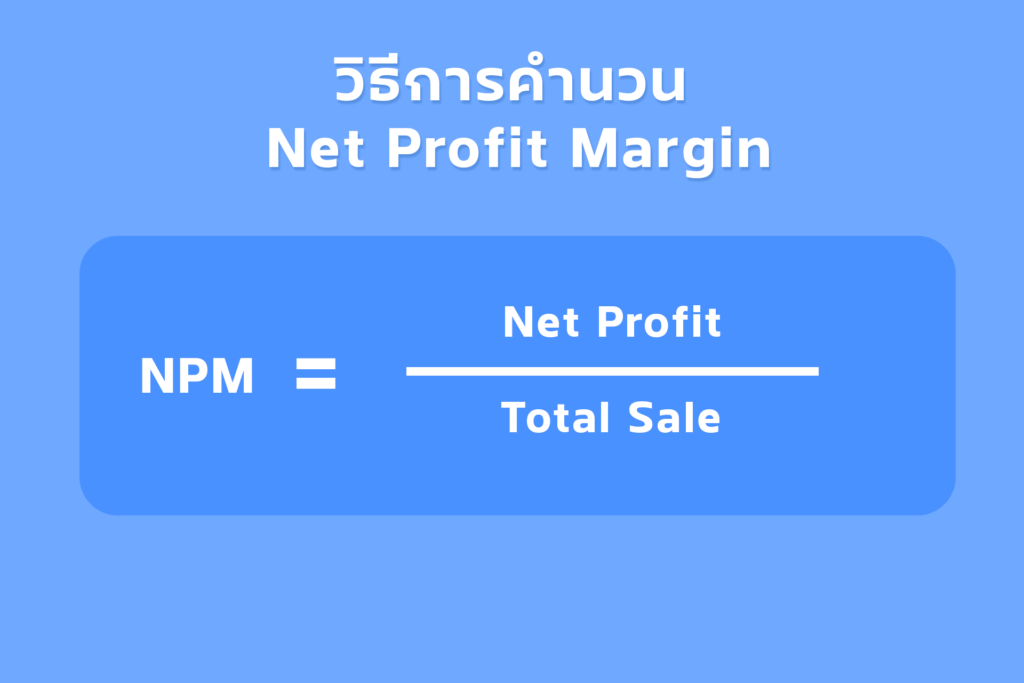
example
- If the company has total revenue of 1,000,000 baht
- There was a net profit of 100,000 baht
Calculating
1,000,000 baht ÷ 100,000 baht
means the company can make a profit of 10 baht for every 100 baht of revenue
, or a net profit margin of 10%.
What is a good net profit margin?
Net profit margin doesn't necessarily indicate a good or bad level. Generally, it's used to compare against direct competitors or the industry average to determine whether something is performing well or poorly. This is because some businesses, particularly service industries, tend to have higher net profit margins than manufacturing industries. However, a high net profit margin in an industry isn't always a good thing, as it can attract new competitors to the market, increasing the likelihood of larger players entering the market
Factors affecting Net Profit Margin
- Cost of Goods and Services (COGS) – If the cost of goods sold is high, the net profit margin will decrease.
- Operating expenses – marketing expenses, employee salaries, and office rent can all impact net profit.
- Taxes and loan interest – Businesses with high tax burdens or significant loan interest payments will have lower net profit margins.
- Management efficiency – controlling costs and improving operational efficiency can help increase net profit margins.
- Market competition – If competition is high, businesses may have to lower their selling prices, resulting in reduced profits.
How to improve Net Profit Margin if your business wants to increase its net profit margin.
- Increase revenue by expanding markets or adding value to products/services.
- Reduce costs by finding suppliers with lower costs for goods or raw materials.
- Improve work processes , such as using technology to reduce operating costs.
- Improve the efficiency of tax and loan management to reduce financial expenses.
summarize
Net profit margin is a key indicator of a business's actual profitability after deducting all costs and expenses. A high profit margin indicates efficient cost management and the ability to generate good returns for owners and investors. Conversely, a low profit margin or losses may necessitate adjustments to cost, pricing, or operational strategies for long-term sustainability
You can find other articles at: https://demo.rdbi.co.th/blog/
For inquiries or questions regarding the use of Net Profit Margin, please contact us
Page: http://bit.ly/rdbipage
Facebook : https://www.facebook.com/RandDBI/
Line OA : @rdbi
Tel : 02-681-9700
Email : sales@rdbi.co.th 🌟