
📍Problems in organizations that prevent them from utilizing available data effectively…
The obstacles that organizations face in processing data are as follows:
💡1. The difficulty in collecting large amounts of data from multiple sources
➡️ Internal organizational data is constantly generated and changing, including data from POS (Point of Sale) systems, online systems for each sales channel, ERP systems, inventory systems, and various files, as well as ever-growing customer data. When personnel within the organization need to use this data, they may lack the expertise and require training in data management skills. Sometimes, the ERP system may not be able to provide the necessary data insights.
💡2. The Complexity of Data Infrastructure Management
➡️ When organizations need to collect, manage, analyze, process, and utilize data, they must go through complex steps. Each step uses different management tools and requires personnel with expertise in each area. All of this leads to the complexity of managing data infrastructure, and developing a successful automated data dashboard reporting system can take up to 8 months, which may impact the organization's ability to compete in the business.
💡3. High costs associated with managing large amounts of data
➡️ Hiring skilled personnel is quite expensive, and the diverse skills required result in a shortage of truly expert personnel compared to the labor market's demand. Furthermore, the complex data management processes lead to increased costs for both software and hardware, impacting the organization's overall expenses.
📍Based on the three problems mentioned above, organizations need to look for effective tools, solutions, and management methods to leverage data for business growth and stay ahead in the data-driven modern world
Therefore, R&D BI Co., Ltd. is committed to developing products called
✨“Intelligent Sales Reporting System” and “Intelligent Inventory Reporting System”✨
to help solve problems for executives and business owners, enabling them to manage sales and inventory more easily, thereby increasing revenue, reducing costs, improving efficiency, and minimizing potential risks.
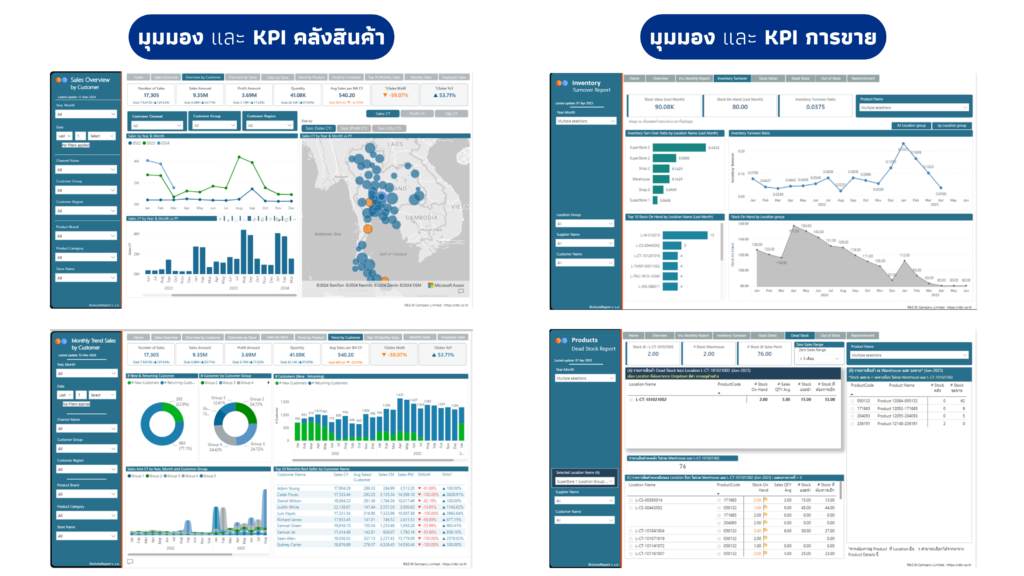
✅ Intelligent Sales Reporting System.
Functions as follows:
1. Analyzes overall sales, profit/loss, top/bottom sales, and average sales per branch.
2. Analyzes product/brand growth trends, identifying problematic product groups and
promising new
. 3. Analyzes customer behavior, including customer groups (new and existing), sales per bill, and average sales per bill.
4. Analyzes sales behavior, identifying unsold products and declining sales.
5. Analyzes the sales team, identifying which products are selling well and whether sales targets are being met.
✅ Intelligent Warehouse Reporting System
for efficient warehouse management, maximizing profits and facilitating efficient product movement between warehouses.
The system works as follows:
1. Analyzes the overall inventory, planning and managing stock effectively.
2. Checks inventory status, identifying normal and old stock.
3. Analyzes sales cycles.
4. Analyzes dead stock and out-of-stock issues.
5. Searches for and manages products, and facilitates product movement between warehouses.
✨ Drive business success with data-driven decision-making – Discover hidden insights within your data ✨
Sales and Inventory Intelligence: https://demo.rdbi.co.th/power-bi-report-template/
💡Other articles about Business Analytics: https://demo.rdbi.co.th/category/business-analytics/
For more information, please visit our page at http://bit.ly/rdbipage or
us via Line OA: @rdbi
Tel: 02-681-9700
Email: sales@rdbi.co.th 🌟