
🎯 In the manufacturing industry, machinery is the primary driver of productivity. Continuous machine operation maximizes value and efficiency. However, in reality, machinery inevitably experiences downtime, whether due to predictable causes or not. This downtime, known as downtime losses , is a major reason why OEE (Overall Equipment Effectiveness) decreases significantly. 💭
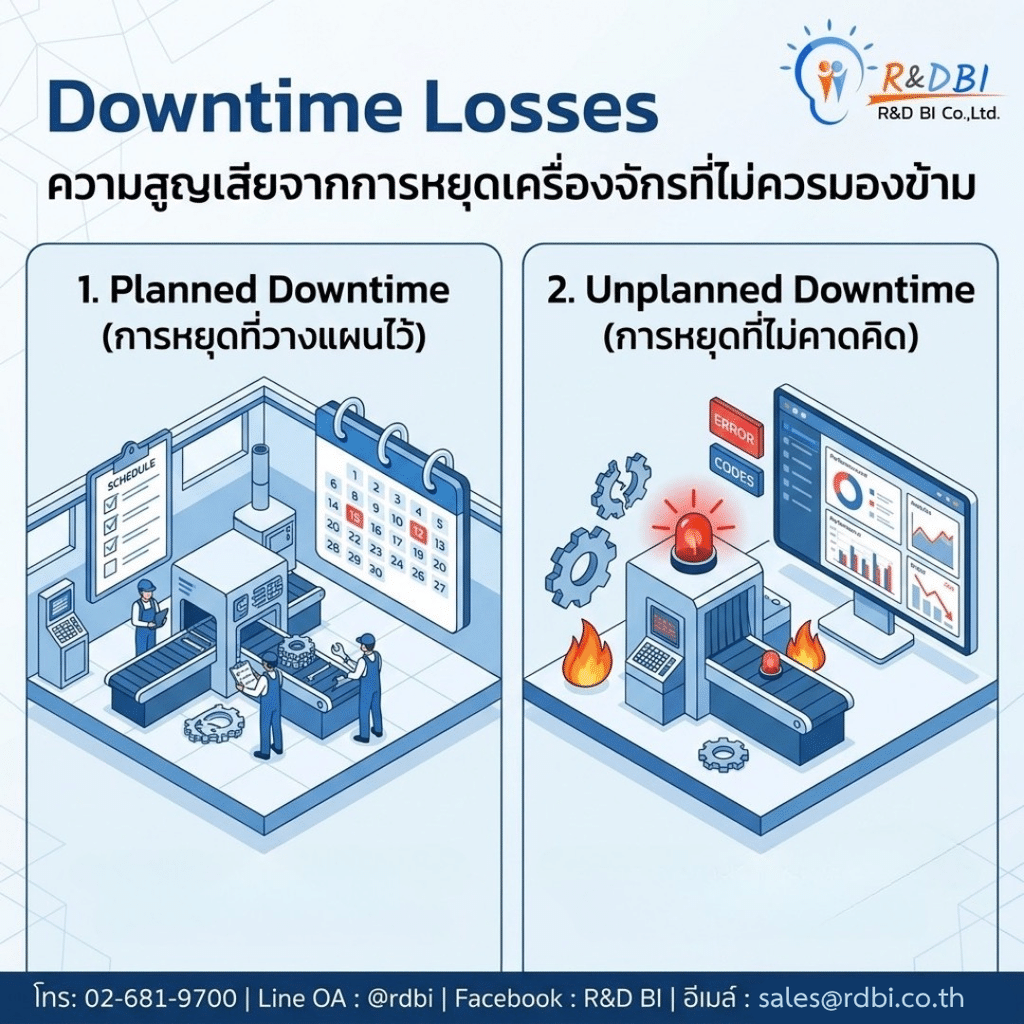
What are Downtime Losses?
Downtime losses refer to periods when machinery is unable to operate as planned, causing production disruptions and impacting the overall efficiency of the production process. These losses are categorized under Availability Losses in OEE (Overall Equipment Effectiveness), which relate to loss of machine availability.
Types of Downtime Losses ⚙️✨
Generally, they can be divided into two main types
1. Planned Downtime
This is the time the manufacturer intentionally stops the machine for various activities, such as:
- Planned maintenance (Preventive Maintenance – PM)
- Product upgrade/changeover
- Quality control or calibration
- Training or cleaning, while necessary and beneficial in the long run, constitutes time when machinery is not producing output
2. Unplanned Downtime
This is an unexpected shutdown, which has a more severe impact because it affects both production schedules and costs, such as:
- Machine breakdown (e.g., motor burnout, belt breakage)
- The shortage of raw materials caused the machinery to shut down and wait
- Power problems such as power outages and unstable voltage
- Human error, such as incorrect settings or improper use
Examples of real-world situations that lead to downtime losses
- The food factory had to shut down its packaging machinery due to a shortage of packaging pouches
- Automotive factories lose hours changing molds for new parts
- The textile machine stopped suddenly because the motor malfunctioned
- The electronics factory had to shut down production to clean up the contaminated area
All of these situations lead to reduced production capacity and create hidden costs that are higher than many people realize
The impact of downtime losses on businesses
- Reduced production efficiency: The machine produces less than it should in the same amount of time
- Increased costs: from labor, damaged raw materials, and maintenance expenses
- Delivery delay: Unable to meet production deadlines, affecting customer satisfaction
- Reduced competitiveness: Competitors who manage downtime better will have lower costs
How to Reduce Downtime Losses
- Preventive maintenance (PM) involves establishing scheduled inspections and repairs to prevent major damage
- Predictive Maintenance (PdM) uses sensors and IoT systems to monitor the condition of machinery in real time and analyze trends before actual failure occurs
- Reduce setup/changeover time by using the SMED (Single Minute Exchange of Dies) concept to minimize product model changeover time
- Improve production planning efficiency, ensure raw material availability, and adjust production schedules to be flexible according to demand
- Create a Total Productive Maintenance (TPM) culture where employees at all levels participate in machine maintenance and report malfunctions immediately
- Use a Downtime Tracking System to record data on every downtime and conduct root cause analysis to reduce recurring problems
summarize
💯 Downtime losses are one of the major production losses that reduce OEE (Overall Equipment Effectiveness). Ignoring them leads to low production efficiency, high costs, and lost competitive advantage. Understanding the causes and systematically analyzing the types of machine downtime will help in implementing targeted preventative and corrective measures
When organizations rigorously monitor and manage downtime, it ensures optimal machine availability, stable production, and creates a long-term competitive advantage
You can find other articles at: https://demo.rdbi.co.th/blog/
#R&DBI #DowntimeLosses #ReduceMachineDowntime #ProductionEfficiency #PreventiveMaintenance #Repair #FactoryMachinery #ProductionManagement
📞 Tel: 02-681-9700 | Line OA: @rdbi | Facebook: R&D BI | Email: sales@rdbi.co.th